Liposuction is one of the most common cosmetic procedures performed in the United States — but it is still surgery, and surgery carries real risks. The question isn't whether liposuction has risks (it does), but how large those risks are, which patients face higher risk, and what choices most directly reduce the probability of a serious complication.
This guide presents the actual peer-reviewed data on liposuction complications and mortality — not reassuring marketing language, and not fear-mongering. The numbers are good for patients who make informed choices. The numbers are worse for patients who don't.
The Baseline: Liposuction Safety by the Numbers
A 2024 systematic review and meta-analysis published in PubMed analyzed liposuction complication data across major studies. A separate national analysis examined over 246,000 liposuction cases performed in accredited ambulatory surgery facilities. The data consistently shows:
- Overall complication rate in accredited outpatient settings: 0.40% to 0.63%
- Overall complication rate (all settings, including non-accredited): 2.62%
- Mortality rate: approximately 0.009% (roughly 1 in 11,000 procedures)
The gap between 0.40% (accredited facilities) and 2.62% (all settings) is the clearest data argument for choosing a qualified surgeon in an accredited facility. The setting matters as much as the procedure.
For context: the mortality rate for general anesthesia alone in healthy patients is approximately 1 in 100,000. Liposuction mortality (0.009%, or 1 in 11,000) is higher than general anesthesia alone, which reflects the cumulative surgical risk — but it remains in the range of other commonly performed elective procedures.
Most Common Liposuction Complications
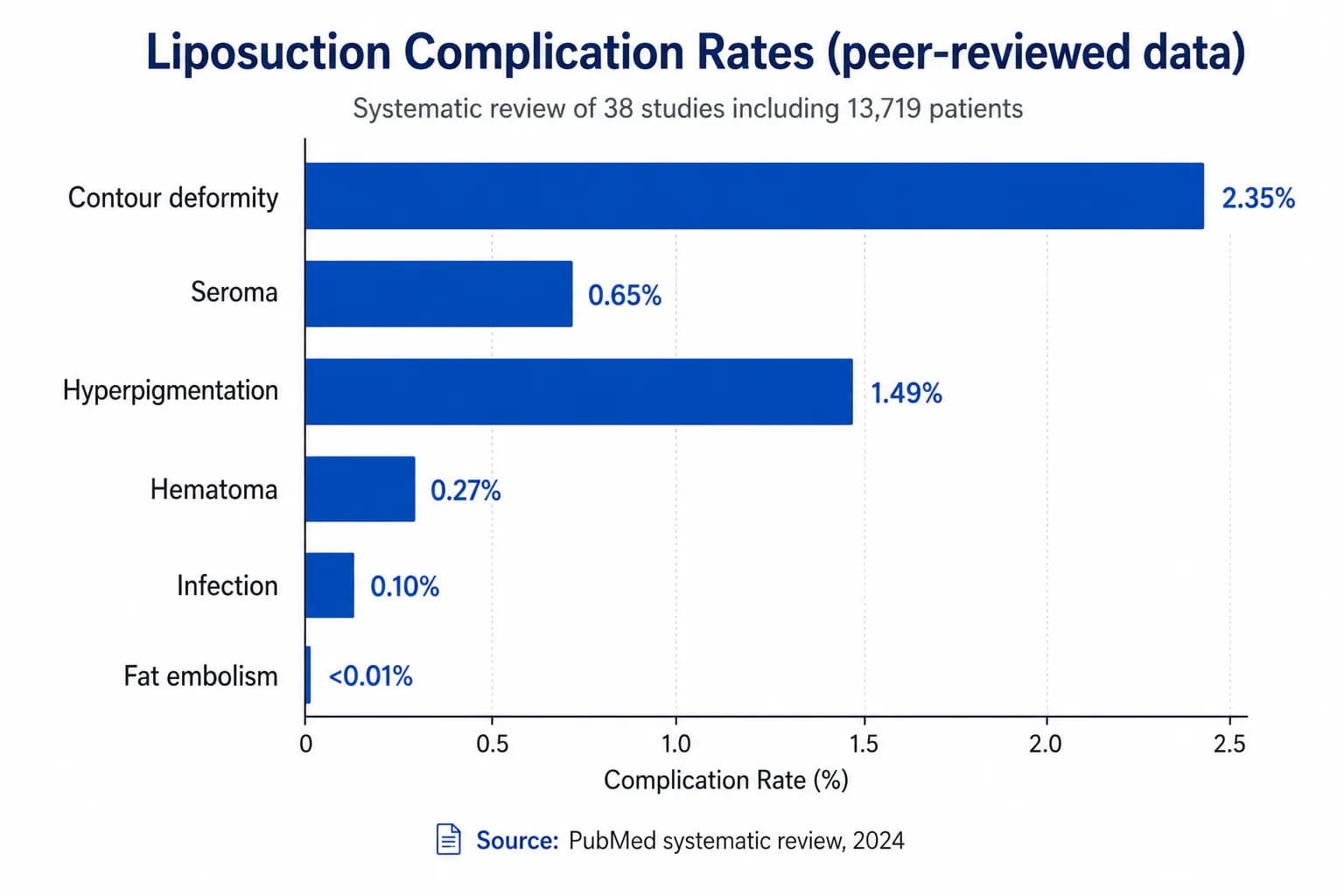
Contour Irregularity (Most Common)
Contour irregularity — depressions, bumps, waviness, or rippling in the skin surface after fat removal — is the most commonly reported complication. Published rates range from 2.35% in systematic reviews to as high as 9% in older studies that include surgeon self-reporting.
Contour irregularity results from:
- Uneven fat removal across adjacent zones
- Over-removal in a localized area creating a depression
- Poor skin elasticity that doesn't contract smoothly over the new contour
- Superficial (too-close-to-skin) fat removal
Prevention: smaller cannulas, crisscross technique that treats each zone from multiple angles, careful preservation of a smooth fat layer under the skin, and honest candidacy assessment that screens out patients with poor skin elasticity.
Treatment: Mild cases often self-resolve or improve with massage. Significant irregularities may require revision liposuction, fat grafting to fill depressions, or in some cases Renuvion/J-Plasma skin tightening.
Seroma (Fluid Collection)
A seroma is a collection of lymphatic fluid in the space where fat was removed. It presents as a soft, fluctuant pocket — often visible and palpable — that develops 1 to 2 weeks post-surgery.
Seroma rate: approximately 0.65% in accredited facilities, though rates vary significantly by body area and procedure size. Larger procedures and areas with significant dead space (lower abdomen, flanks) carry higher seroma risk.
Treatment: Needle aspiration — simple, in-office, and effective. Multiple aspirations may be needed over 2 to 4 weeks. Wearing the compression garment as prescribed is the single most effective seroma prevention measure, as it applies pressure that closes the dead space.
Hyperpigmentation
Post-inflammatory hyperpigmentation — darkening of the skin over treated areas — occurs in approximately 1.49% of patients. It is more common in patients with darker skin tones and in areas subjected to significant trauma during the procedure.
Most hyperpigmentation is temporary and resolves within 6 to 12 months. Topical treatments (kojic acid, vitamin C, hydroquinone) and sun avoidance accelerate resolution. Permanent hyperpigmentation is rare.
Hematoma (Blood Collection)
A hematoma is a collection of blood in the surgical space. Rate: approximately 0.27%. Risk factors include blood-thinning medications or supplements not disclosed before surgery, high blood pressure, aggressive technique, or early strenuous activity.
Small hematomas reabsorb on their own. Large hematomas may require drainage. Prevention: stopping blood thinners as directed by your surgeon, controlling blood pressure before surgery, and avoiding strenuous activity in the first post-op week.
Infection
Infection rates in accredited facilities are under 0.10% — very low. The tumescent technique itself has antimicrobial properties, and proper sterile technique dramatically limits infection risk. When infections do occur, they usually present as increasing redness, warmth, and pain at incision sites, typically 3 to 7 days post-surgery.
Treatment: antibiotics for mild infections, surgical drainage for abscesses. A rapidly spreading infection with fever and systemic symptoms is a medical emergency.
Numbness and Altered Sensation
Numbness, tingling, and altered sensation in treated areas are extremely common — affecting a significant proportion of patients — and are not technically a complication. They result from disruption of superficial sensory nerves and resolve over weeks to months as nerves regenerate. Permanent numbness is rare but does occur in a small percentage of patients.
Serious and Rare Complications
Pulmonary Thromboembolism (Blood Clot in Lungs)
The most common cause of liposuction mortality. Deep vein thrombosis (DVT) forms in the legs and a clot can travel to the lungs, causing pulmonary embolism — a potentially fatal event.
Risk factors: prolonged surgery, long sedentary recovery period, obesity, personal or family history of clotting, hormone medications (including birth control pills and HRT), and not walking early enough post-surgery.
Prevention: walking from day one is not optional — it is a clinical requirement. For a full timeline of when to resume activity, see our week-by-week recovery guide. Surgeons managing higher-risk patients may prescribe blood thinners or compression boots during surgery. Hydration and early ambulation are the most modifiable risk factors.
Fat Embolism
Fat embolism occurs when fat particles enter the bloodstream and travel to the lungs, brain, or skin. It is rare but serious — presenting as sudden respiratory distress, chest pain, altered consciousness, and a petechial rash (small red dots) on the skin.
Fat embolism is more likely with large-volume liposuction, aggressive technique, or direct vascular injury. In accredited facilities with proper anesthesia monitoring, the risk is extremely low. It is a medical emergency requiring ICU-level care.
Lidocaine Toxicity
Tumescent liposuction uses diluted lidocaine in the infiltration fluid. In very large volumes or at incorrect concentrations, lidocaine can reach toxic levels — causing dizziness, seizures, cardiac arrhythmia, or arrest.
Properly trained surgeons use standard concentration protocols (typically 0.05% to 0.1% lidocaine) with dose limits calculated by patient weight. Lidocaine toxicity is rare in properly conducted procedures and virtually never occurs when concentration and total dose limits are respected.
Skin Burns (Laser/Thermal Techniques)
Laser-assisted and radiofrequency liposuction devices generate heat. Thermal injury to the skin — burns ranging from mild to severe — is a possible complication if the device is used too aggressively or too superficially. Risk is highest with laser-assisted techniques (SmartLipo, SlimLipo) and with less-experienced operators.
How Combining Procedures Changes the Risk Profile
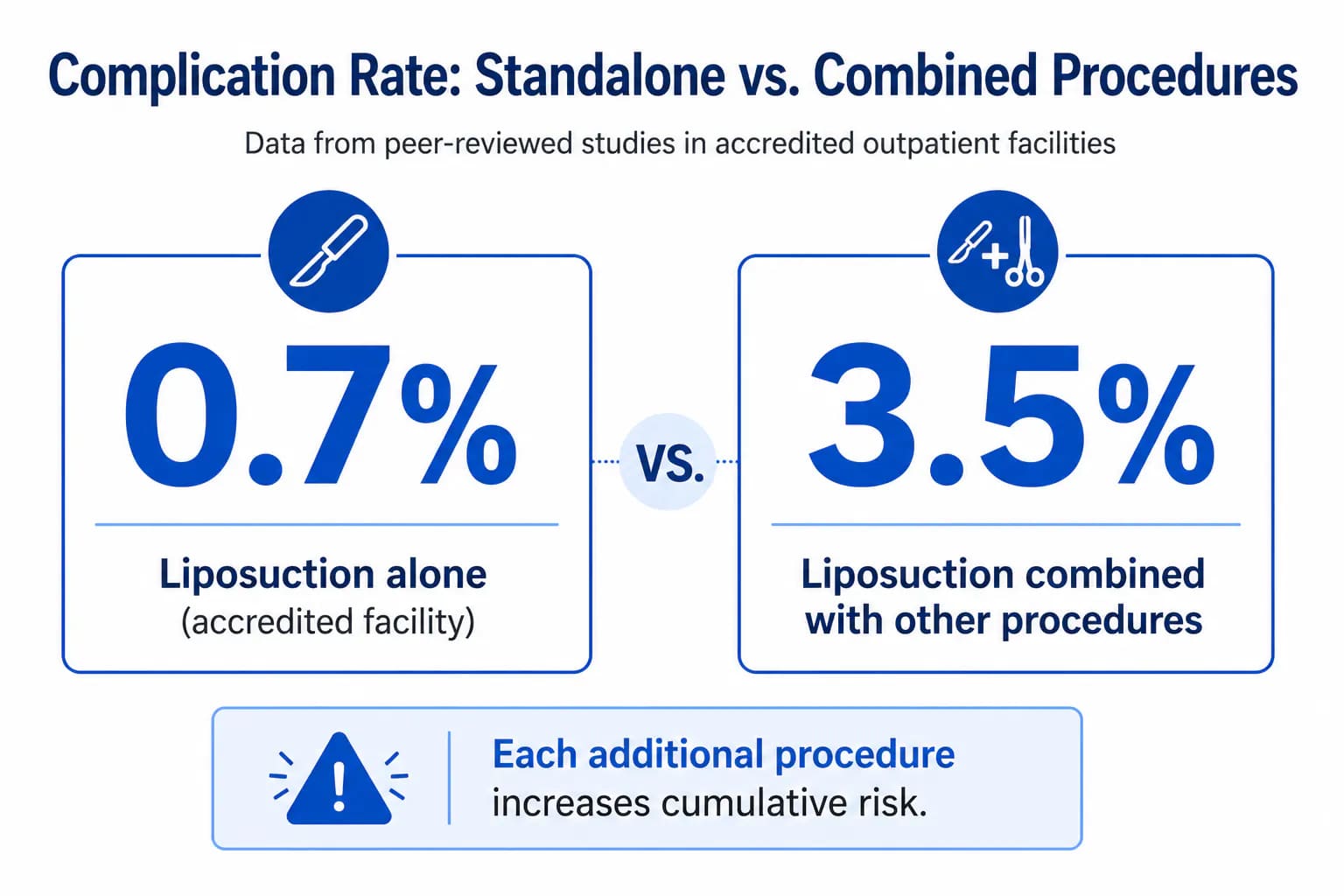
Combining liposuction with other procedures — tummy tuck, BBL, breast surgery — significantly increases total risk:
| Scenario | Complication Rate |
|---|---|
| Liposuction alone (accredited facility) | 0.7% |
| Liposuction combined with other procedure(s) | 3.5% |
Longer operative time, greater anesthesia exposure, more extensive tissue disruption, and increased blood loss all contribute. Each additional procedure added to a surgery session compounds risk.
This doesn't mean combination procedures are wrong — they are often clinically appropriate and more efficient than separate surgeries. But they should be chosen based on sound surgical reasoning, not because the surgeon is upselling add-ons during your consultation.
Ask specifically: "Why are you recommending we do these together rather than separately?" A good surgeon has a clinical answer.
The Single Biggest Risk Reducer: Surgeon and Facility
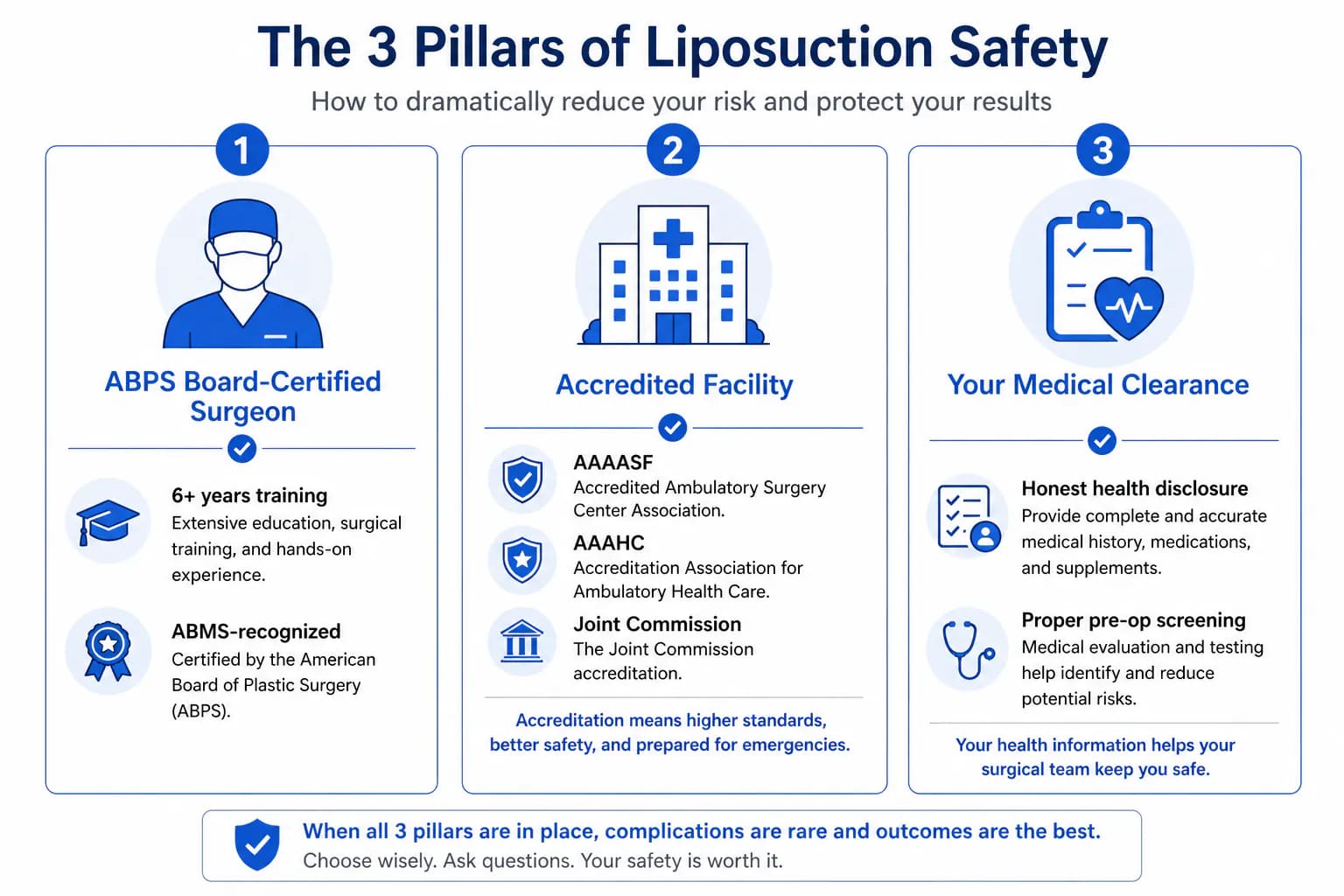
The data makes this clear: the gap between 0.40% and 2.62% complication rates is almost entirely explained by surgeon qualification and facility accreditation. For strategies on getting good value without cutting safety corners, see our affordable liposuction guide.
Board certification matters:
- An ABPS (American Board of Plastic Surgery) board-certified surgeon has completed 6+ years of surgical training including residency and fellowship, passed rigorous written and oral examinations, and maintains ongoing board certification.
- The American Board of Cosmetic Surgery (ABCS) requires only 1 year of training and is not recognized by the American Board of Medical Specialties (ABMS). California has ruled that ABCS diplomates cannot legally advertise as "board certified." Choosing a surgeon based on the claim "board certified" without verifying which board is one of the most common and consequential mistakes patients make.
Verify your surgeon's ABPS certification at abplasticsurgery.org.
Facility accreditation matters:
Procedures performed in AAAASF (American Association for Accreditation of Ambulatory Surgery Facilities), AAAHC (Accreditation Association for Ambulatory Health Care), or Joint Commission-accredited facilities have:
- Mandatory equipment, staffing, and protocol standards
- Required anesthesia credentials
- Emergency protocols and required crash carts
- Regular external audits
Non-accredited settings — offices, spas, "med spas" without proper accreditation — face none of these requirements. Their complication rates are dramatically higher.
Verify facility accreditation at aaaasf.org or aaahc.org before scheduling surgery.
Your Pre-Surgery Disclosure: What Not to Hide
Many serious liposuction complications are preventable — and the most preventable ones involve patients withholding information from their surgeon.
Tell your surgeon about everything:
- All medications: including aspirin, ibuprofen, blood thinners, diabetes medications
- All supplements: fish oil, vitamin E, garlic, ginkgo, St. John's Wort (many increase bleeding risk significantly)
- Smoking: nicotine impairs healing, causes vasoconstriction, and dramatically increases complication risk — surgeons require cessation before and after surgery
- Birth control pills and HRT: increase clotting risk
- Personal or family history of blood clots (DVT or PE)
- Any chronic conditions: diabetes, heart disease, bleeding disorders, kidney or liver problems
- Prior anesthesia complications
- Prior cosmetic procedures and results
Surgeons cannot assess your risk without complete information. Omitting details to avoid being disqualified doesn't protect you — it removes the physician's ability to protect you.
Safe Volume Limits: Why They Exist
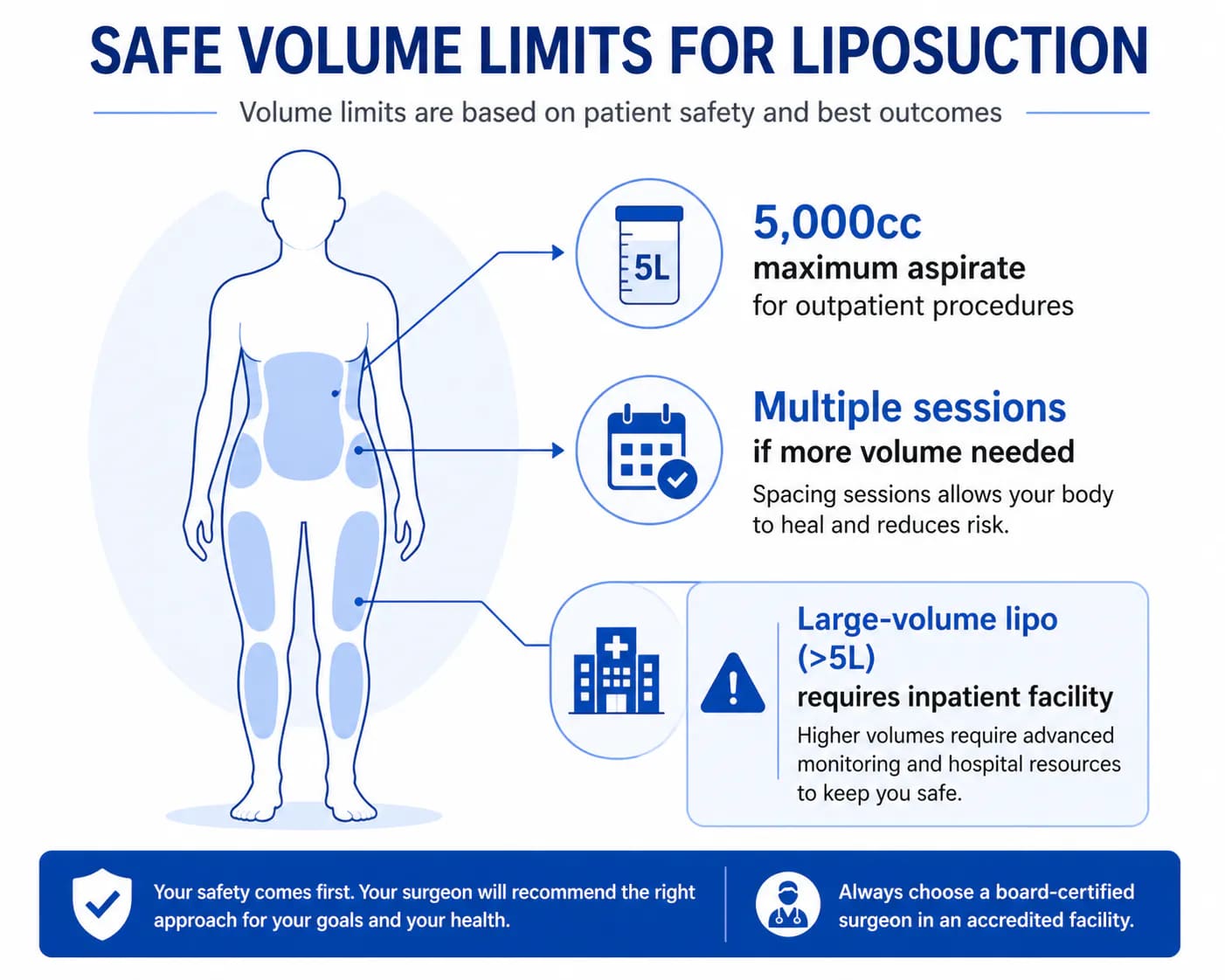
The volume of fat that can be safely removed in a single session is a patient safety issue, not an aesthetic preference.
- Outpatient procedures: Most board-certified surgeons limit total aspirate to 5,000cc (about 11 lbs) in accredited outpatient settings
- Large-volume liposuction (> 5,000cc): Requires inpatient hospital admission, overnight monitoring, and more intensive anesthesia management
- Extreme volume removal: Each additional liter of aspirate increases cardiovascular stress, fluid balance challenges, and fat embolism risk
Surgeons who offer to remove very large volumes in a single outpatient session without hospitalization are operating outside evidence-based practice guidelines. This is a red flag. For the full framework on vetting your surgeon, see our guide to choosing a safe liposuction surgeon.
When to Seek Immediate Care
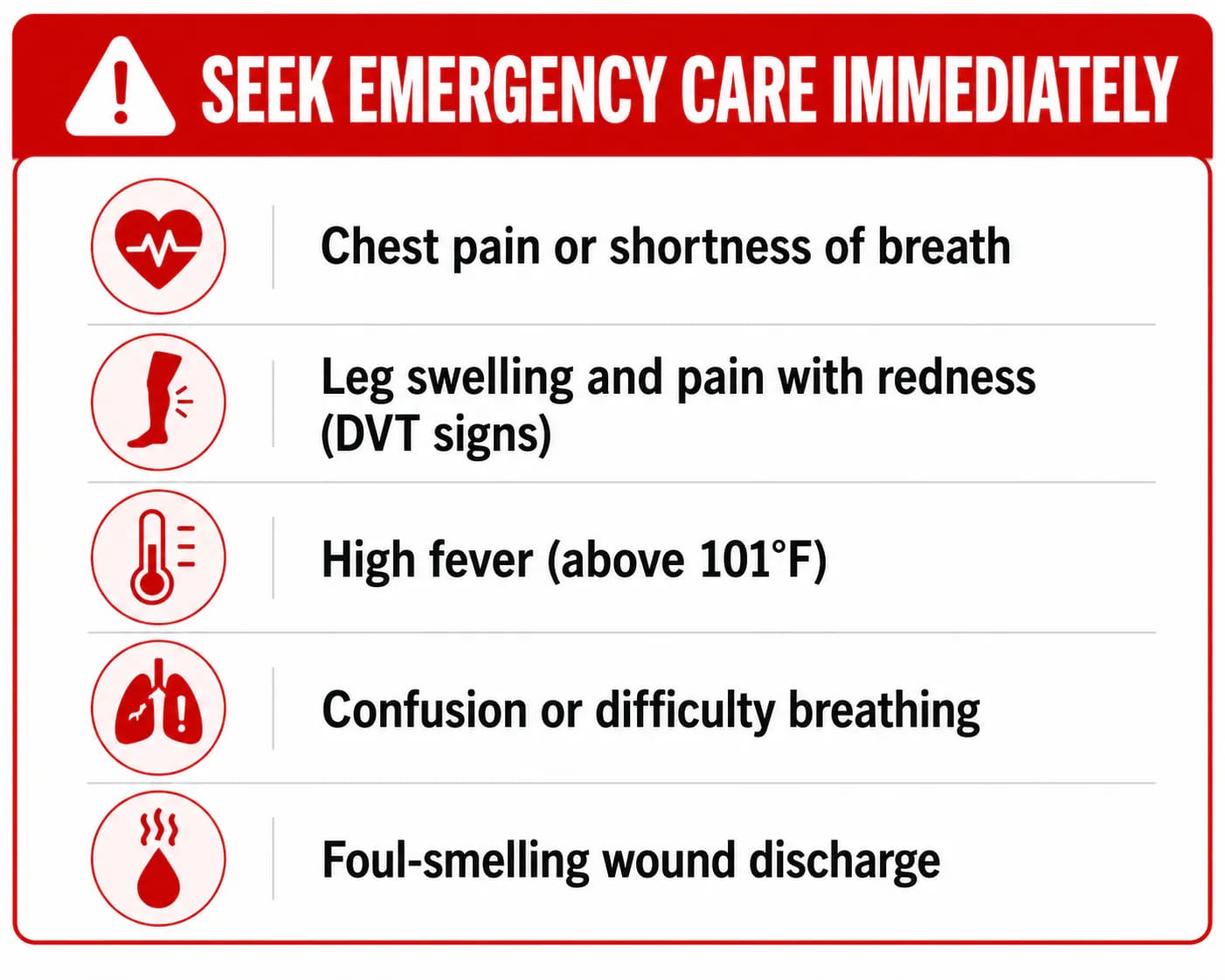
Most post-liposuction symptoms are normal. These are not:
Call your surgeon:
- Fever above 101°F (38.3°C)
- Increasing redness, warmth, or swelling at incision sites
- Foul-smelling or unusual discharge from incisions
- Sudden increase in swelling in a localized area (seroma)
- Pain that is worsening, not improving after day 3
Seek emergency care immediately:
- Chest pain, shortness of breath, or coughing up blood (pulmonary embolism)
- Leg swelling, pain, and redness in one leg (DVT)
- Confusion, altered consciousness, or difficulty breathing
- Rapidly spreading redness with fever and rapid heartbeat
Blood clots are rare but time-sensitive. If you experience chest pain or shortness of breath in the days following liposuction, do not wait — call emergency services.
How dangerous is liposuction? In accredited facilities with board-certified surgeons, the overall complication rate is 0.40% to 0.63% and mortality is approximately 0.009%. These are low but non-zero numbers. The risk is significantly higher in non-accredited settings with unqualified practitioners.
What is the mortality rate? Approximately 0.009% — roughly 1 in 11,000 procedures in modern studies. The most common cause of liposuction death is pulmonary thromboembolism (blood clot).
What are the most common complications? Contour irregularity (2.35%), hyperpigmentation (1.49%), seroma (0.65%), hematoma (0.27%), and infection (under 0.10%) based on peer-reviewed data. Most are manageable and correctable.
What is a seroma? A collection of lymphatic fluid under the skin, occurring in ~0.65% of patients. Treated with needle drainage. Compression garments are the primary prevention.
Can liposuction cause fat embolism? Yes, rarely. Fat entering the bloodstream can travel to the lungs or brain. Risk is higher with large volumes, aggressive technique, and non-monitored settings. Medical emergency — seek care immediately if symptoms appear.
How do I reduce my risk? Choose an ABPS board-certified surgeon, verify facility accreditation (AAAASF/AAAHC/Joint Commission), and disclose your complete health history. These three factors account for the majority of preventable complications.
What should I tell my surgeon? Everything — all medications, supplements, smoking, clotting history, chronic conditions, and prior procedures. Omitting information removes your surgeon's ability to protect you.
Does combining procedures increase risk? Yes. Liposuction alone: 0.7% complication rate. Combined with another procedure: 3.5%. Each addition compounds risk via longer surgery time and greater physiological stress.
