360 liposuction removes fat from the full circumference of your torso — abdomen, waist, flanks, upper back, lower back — and a BBL takes that removed fat, purifies it, and transfers it to your buttocks. Done together in one surgery, the result is a narrower waist and fuller, shapelier buttocks at the same time. Combined, these procedures cost between $8,000 and $18,000 in the US depending on your market and surgeon.
This guide covers everything a serious candidate needs to know: how the procedure works, what recovery actually looks like week by week, the safety history you deserve to understand before you book, and how to find a surgeon who does this specific combination well.
What Is 360 Lipo and BBL?
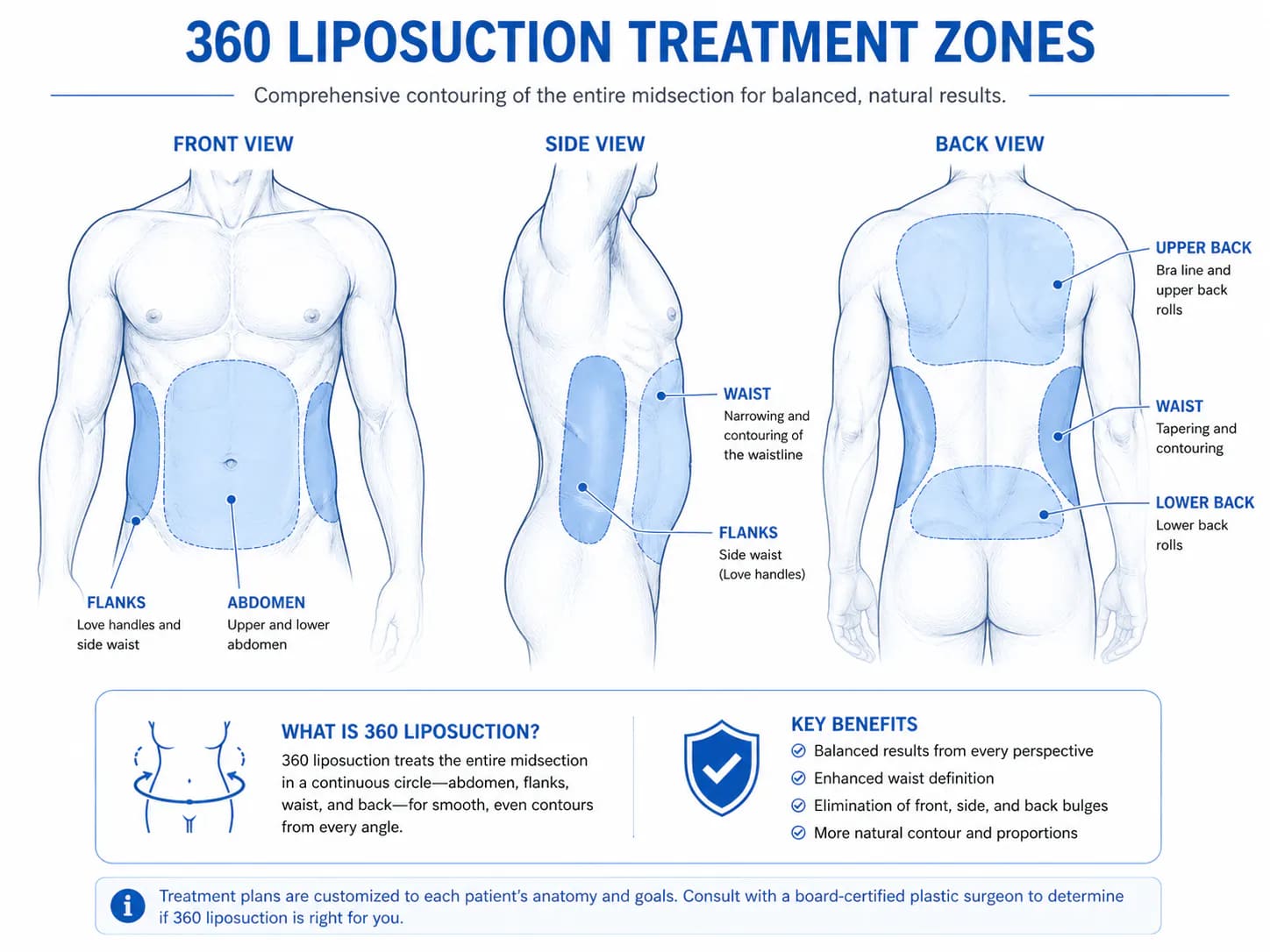
Lipo 360 — also called liposuction 360 or 360 liposuction — means fat is removed from the entire circumference of your midsection. Not just the front of your stomach. Not just your flanks. The full torso: abdomen, obliques, love handles, upper back, and lower back. The result is a more defined, narrowed waist from every angle.
A Brazilian Butt Lift (BBL) takes the fat removed during liposuction, processes and purifies it, then injects it into the buttocks to add volume, improve shape, and create projection and lift.
The reason these two procedures are commonly paired is straightforward: a BBL requires a fat source, and Lipo 360 creates one. One surgery, one recovery, two goals achieved simultaneously. For patients who want both a defined waist and fuller buttocks, doing them together is more efficient and usually more cost-effective than staging them separately.
The combined operating time is typically 3 to 5 hours under general anesthesia. You go in for one procedure. You wake up with both done.
The Hourglass Effect: What Results Look Like
The combination works because of contrast. When fat is removed from the waist and flanks and transferred to the buttocks, the ratio between waist and hip width changes substantially. This is the anatomical foundation of the hourglass silhouette — not a surgical illusion, but an actual change in proportion driven by where the fat is and where it is not.
Immediately after surgery, results will look more dramatic than the final outcome. Your surgeon overfills the buttocks by roughly 30–50% because fat graft survival is not guaranteed — your body will absorb a portion of the transferred fat over the first three to six months as the surviving fat establishes its blood supply. What looks exaggerated at week two is closer to your actual final result by month six.
By six months, the fat that has survived integration is permanent. The fat cells removed from your waist and flanks do not come back.
One result patients consistently underestimate: the back view. Lipo 360 removes fat from the lower and upper back in a way that standard abdominal liposuction never addresses. The change in the rear profile is often one of the most dramatic parts of the transformation — and something you will not fully appreciate until you see it in photographs.
Am I a Candidate for 360 Lipo and BBL?
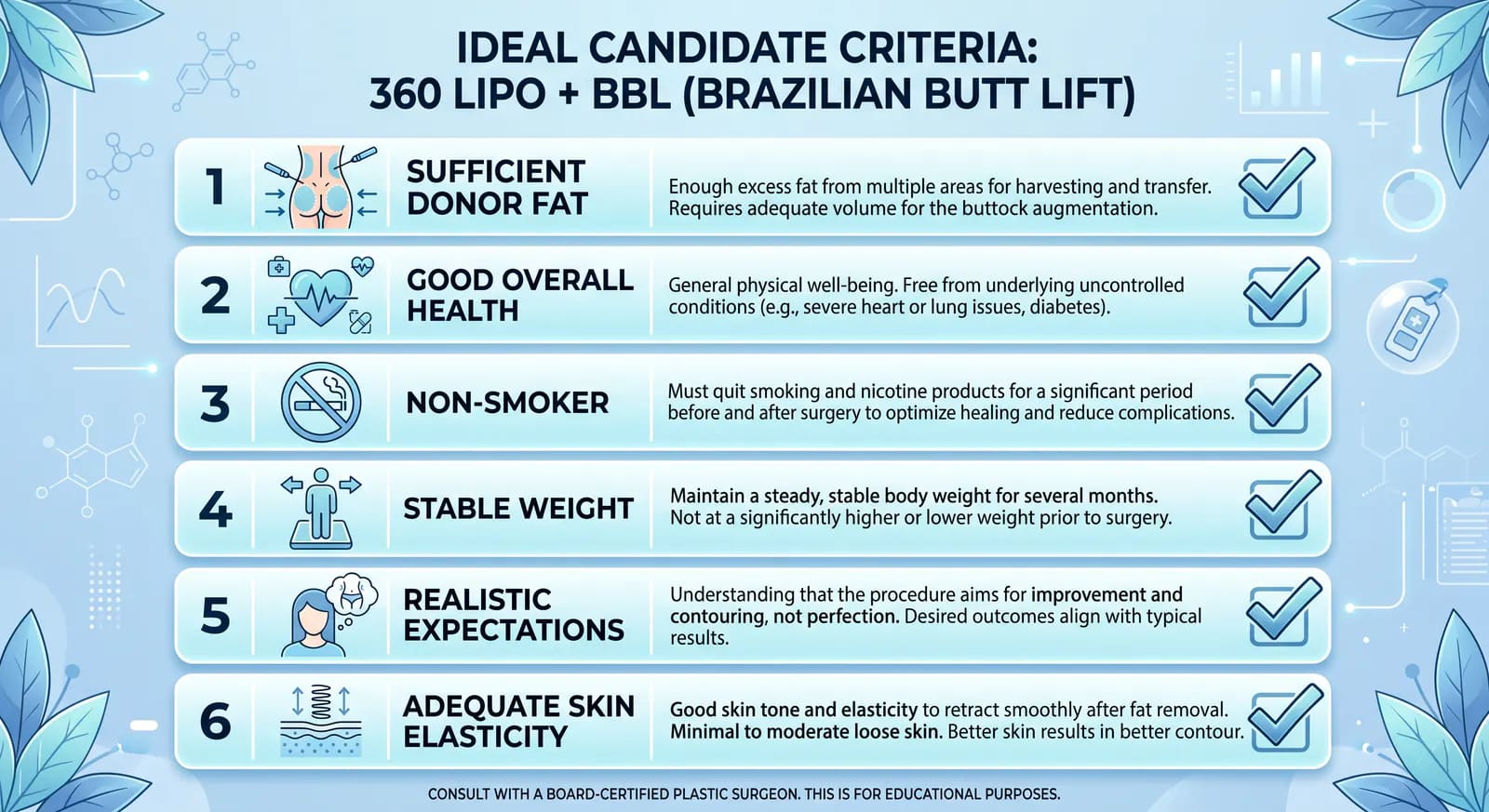
The most critical candidacy factor for this combination is available donor fat. A BBL requires enough harvestable fat to achieve meaningful buttock augmentation. If you have very little body fat, there may not be enough viable material for transfer. Your surgeon will assess this at consultation.
Beyond fat availability, strong candidates generally:
- Are in good overall health with no conditions that impair surgical healing
- Are non-smokers or willing to stop smoking well before surgery (smoking significantly compromises healing and fat graft survival)
- Have stable weight — ideally within 20 pounds of their goal — because significant weight changes after surgery alter results
- Have adequate skin elasticity (heavily stretched or loose skin may not retract evenly after fat removal)
- Have realistic expectations about what fat transfer can and cannot accomplish
Age is less of a limiting factor than overall health. Patients in their 20s through 50s routinely undergo this combination successfully.
Something worth saying plainly: the recovery for this combination is more demanding than either procedure alone. Patients who understand that before surgery have better experiences than those who discover it afterward.
How the Procedure Works
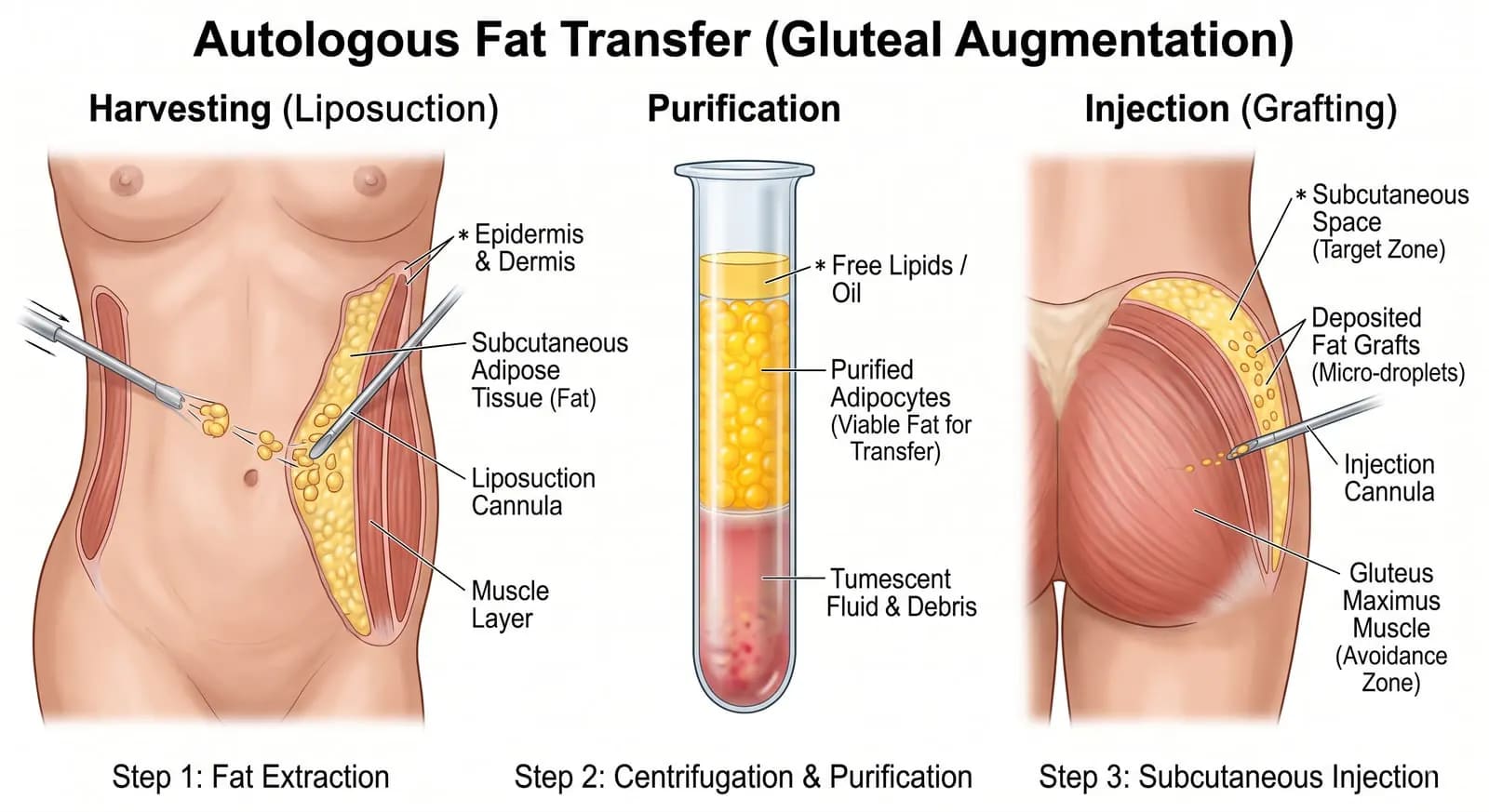
On surgery day, you are placed under general anesthesia. The sequence is:
Step 1 — Lipo 360. Small incisions are made at strategic points around your torso. A tumescent solution — saline mixed with lidocaine and epinephrine — is injected to shrink blood vessels and loosen fat. Fat is then removed via cannula in a circumferential pattern: front, sides, back. Your surgeon works around the full torso to achieve consistent contour rather than isolated reduction.
Step 2 — Fat processing. The harvested fat is not immediately re-injected. It is purified by centrifuge or filtration to separate living fat cells from blood, fluid, and cellular debris. Only viable fat cells go into the next step.
Step 3 — BBL injection. Purified fat is injected into the gluteal region in small deposits distributed across the subcutaneous tissue — the layer above the gluteal muscle. The subcutaneous-only technique is the current safety standard; more on why this matters in the safety section below.
Total operating time: 3–5 hours. Most procedures are performed in an outpatient accredited surgical facility. You return home the same day wearing a compression garment.
Recovery: What to Expect Week by Week
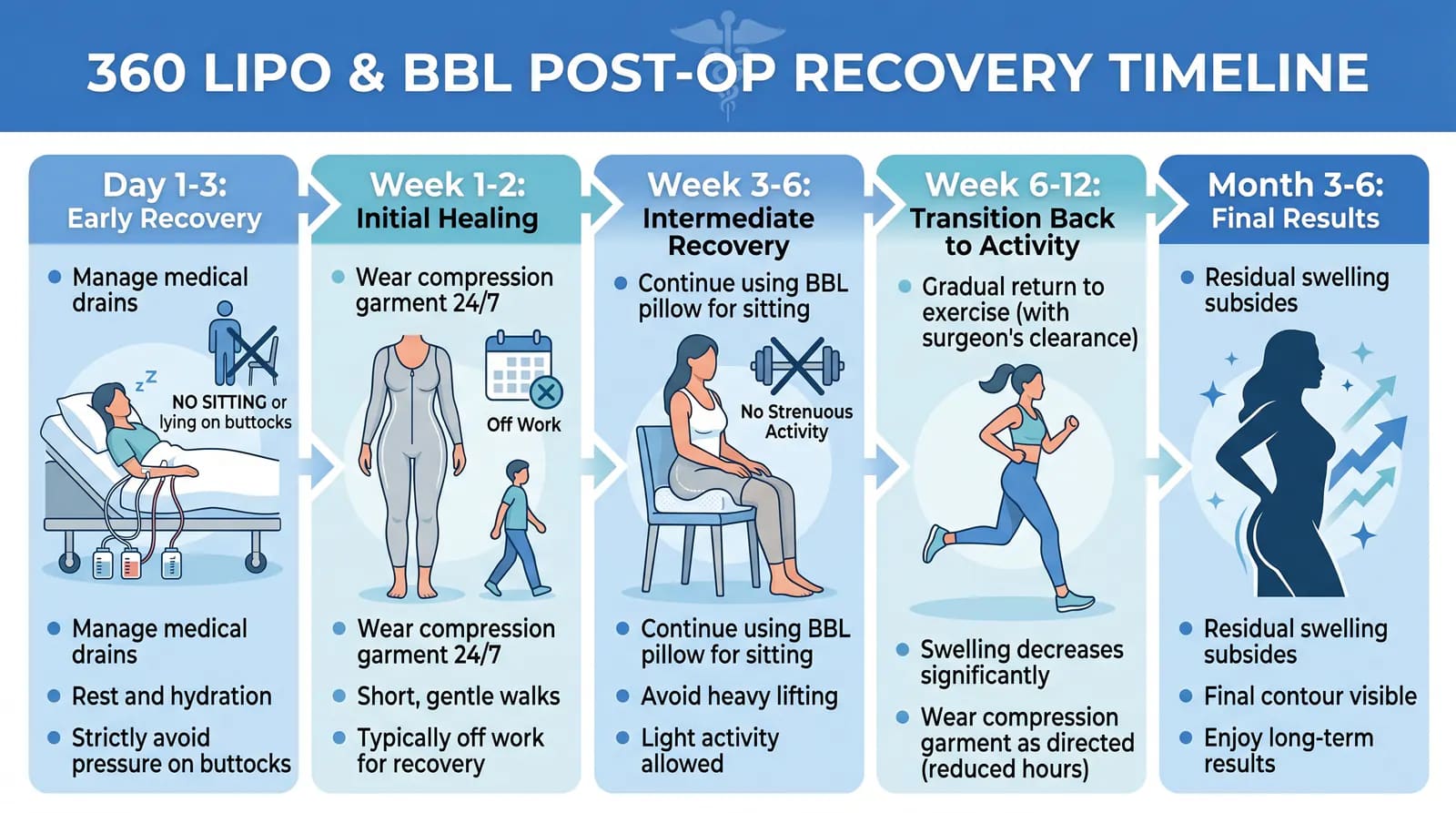
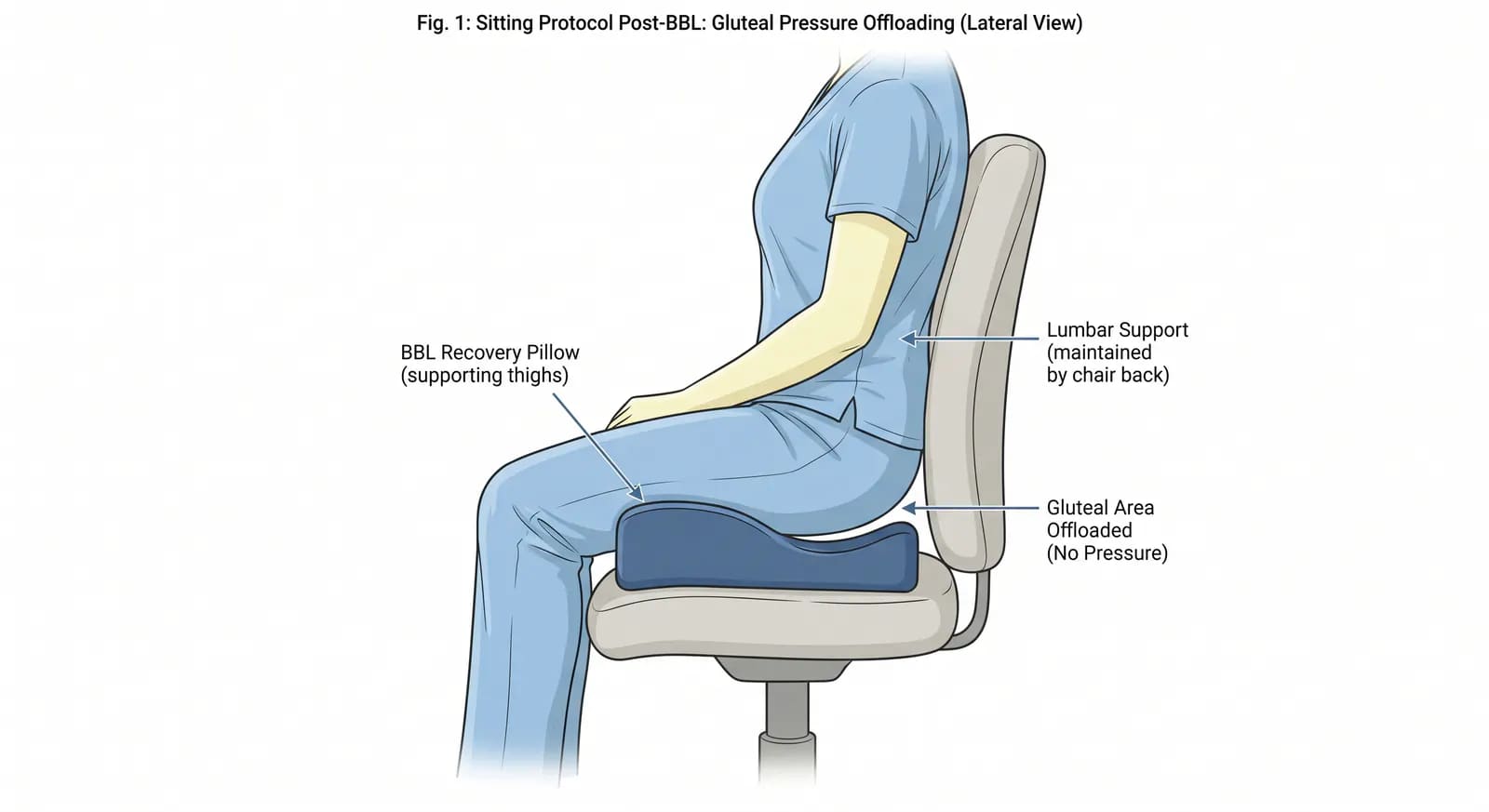
The recovery for combined 360 lipo + BBL is more demanding than lipo alone — primarily because of the BBL sitting restrictions. This is the section most pre-op articles understate.
Days 1–3. Significant swelling, bruising, and discomfort. Surgical drains may be in place. A compression garment covers your torso continuously. You cannot sit or lie directly on your buttocks — a BBL pillow, which elevates your thighs and keeps pressure off the gluteal fat graft, is required whenever you are not standing or lying face-down. Most patients need a caregiver during this period.
Weeks 1–2. Pain is manageable with prescribed medication. Swelling will look worse than it is — this is normal and not an indicator of outcome. Most patients take a minimum of 10 days off work; two weeks is more comfortable if your role involves any physical activity. The compression garment is worn continuously.
Weeks 3–6. The no-direct-sitting restriction typically continues through the first three to six weeks, depending on your surgeon's specific protocol. Compression garment usage may transition to a lighter garment. Energy returns, but strenuous exercise is still off the table.
Weeks 6–12. Most patients are cleared for light exercise and can return to most daily activities. Direct sitting is permitted. Early results are visible as major swelling resolves.
Months 3–6. Final results become visible. Fat graft survival stabilizes. The fat that remains at six months is there permanently.
The honest reality: no two recoveries are identical. Your surgeon's protocols, your body's response, and your compliance with post-op restrictions all shape the timeline.
Safety: What You Should Know About 360 Lipo + BBL Risks
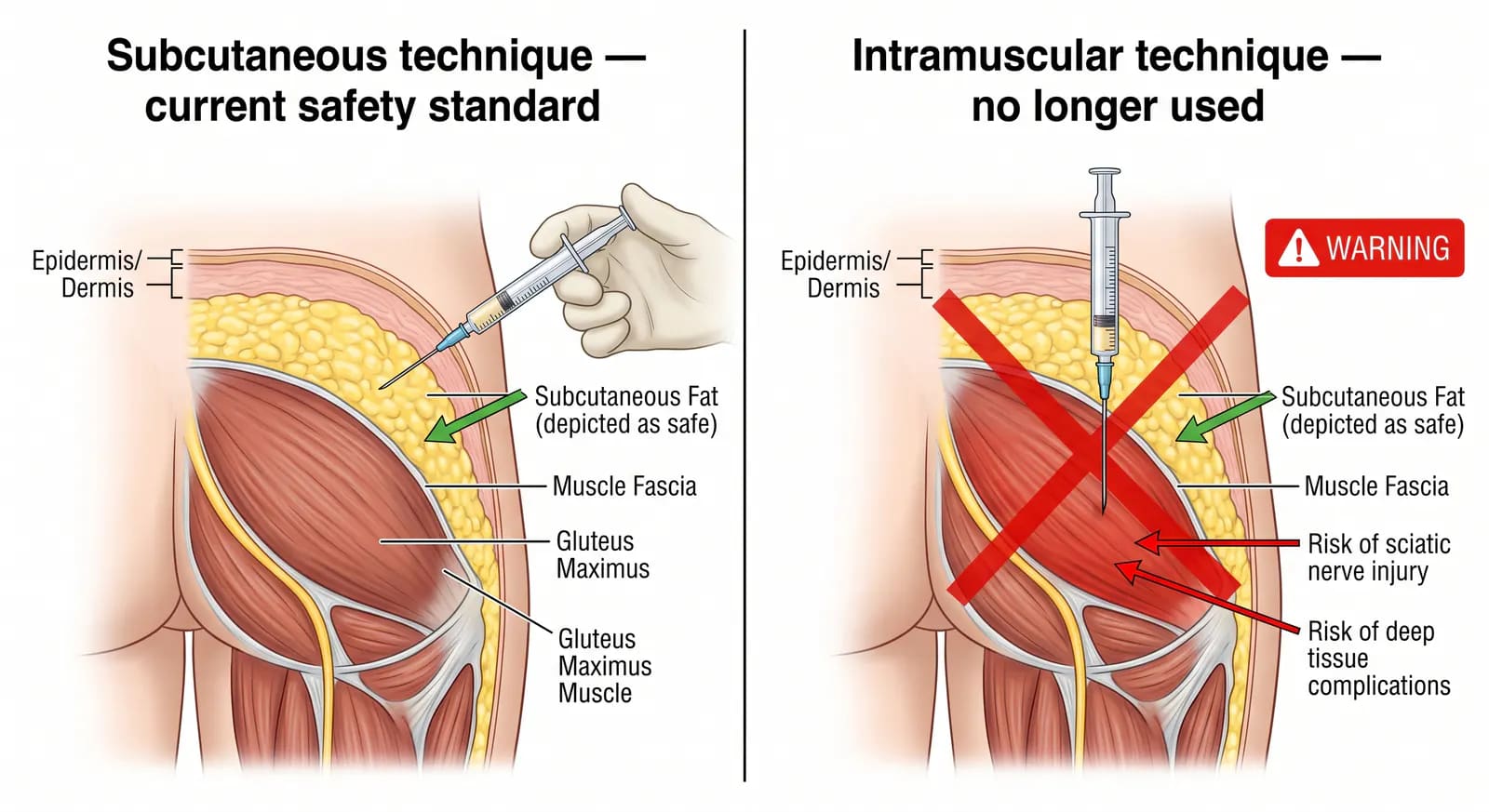
This deserves direct treatment. The BBL has a documented safety history that every patient considering it should understand — not to create fear, but because understanding it is how you ask the right questions and choose the right surgeon.
Before 2017, the BBL had a reported mortality rate of approximately 1 in 3,000 procedures — the highest of any elective cosmetic surgery at the time. That number drove significant changes to surgical technique, overseen by safety task forces from the major plastic surgery boards.
The root cause of most fatalities was fat embolism: fat particles entering the large gluteal blood vessels and traveling to the lungs or heart. This happened when surgeons injected fat deep into or beneath the gluteal muscle, where major vasculature runs. The physics were dangerous and, at the time, not fully understood.
The fix: subcutaneous-only fat injection. When fat is placed exclusively in the subcutaneous tissue — the layer above the muscle — the large blood vessels are outside the cannula's path. The risk of fatal fat embolism drops dramatically. Zero fatalities have been reported from ultrasound-guided BBLs performed with the subcutaneous approach.
By 2026, with subcutaneous-only technique as the accepted standard and ultrasound guidance increasingly common, the mortality rate sits at approximately 1 in 14,952 — an 80% reduction from pre-reform rates. This is not a procedure to avoid. It is a procedure where surgeon technique and credential level determine your risk level.
What this means for choosing your surgeon: Ask specifically whether your surgeon uses subcutaneous-only fat injection. Ask whether they use ultrasound guidance. Confirm the procedure will be performed in an accredited surgical facility. A significantly below-market price deserves scrutiny — the cost of a safe BBL reflects real expenses: board-certified anesthesia, an accredited facility, a qualified surgical team. These are not negotiable line items.
Lipo 360 itself carries the standard risks of liposuction: bruising, swelling, contour irregularities, seroma (fluid accumulation), infection, and anesthesia risks. Serious complications from liposuction performed by a board-certified surgeon in an accredited facility are uncommon.
How Much Does 360 Lipo and BBL Cost?
In the United States, combined 360 lipo and BBL ranges from roughly $8,000 to $18,000, driven by three main factors: geographic market, surgeon experience and credentials, and facility type.
Here's what the market looks like across major US cities:
| Market | Typical Combined Range |
|---|---|
| Miami | $7,500 – $14,000 |
| New York City | $12,000 – $25,000 |
| Dallas / Houston | $9,000 – $16,000 |
| Chicago | $9,000 – $13,000 |
| Los Angeles | $11,000 – $20,000 |
Overseas medical tourism packages — primarily in Turkey and the Dominican Republic — are widely advertised at $4,000–$7,000. These can represent real value and carry real risk. If you are considering this route, research the specific surgeon's credentials, the facility's accreditation status, and what happens if you develop a complication after returning home. "Low cost" is not inherently dangerous, but the cost differential often reflects genuine differences in facility quality and surgeon volume.
For most US patients, the combo procedure costs less than doing each surgery separately. Facility fees, anesthesia, and pre-op costs are shared across both procedures.
Financing through CareCredit, Alphaeon, or practice in-house plans is common and widely available for this price range.
360 Lipo Without a BBL: Is It Worth It Alone?
Yes — and for a meaningful portion of patients, it is the better choice.
Standalone lipo 360 is appropriate when a patient wants circumferential waist definition without buttock augmentation, does not have sufficient donor fat for meaningful transfer, or wants to avoid the extended recovery that the no-sitting restriction requires.
Standalone 360 lipo costs approximately $5,000–$10,000 depending on treatment area and market. The recovery is notably less restrictive — most patients can sit normally from the first day post-op. The contour result from circumferential fat removal alone is significant.
The decision between lipo 360 alone and lipo 360 + BBL is best made at consultation with a surgeon who assesses your specific fat distribution, skin quality, and goals. A surgeon who pushes the BBL without carefully discussing candidacy is worth a second opinion.
How to Choose a Surgeon for 360 Lipo + BBL
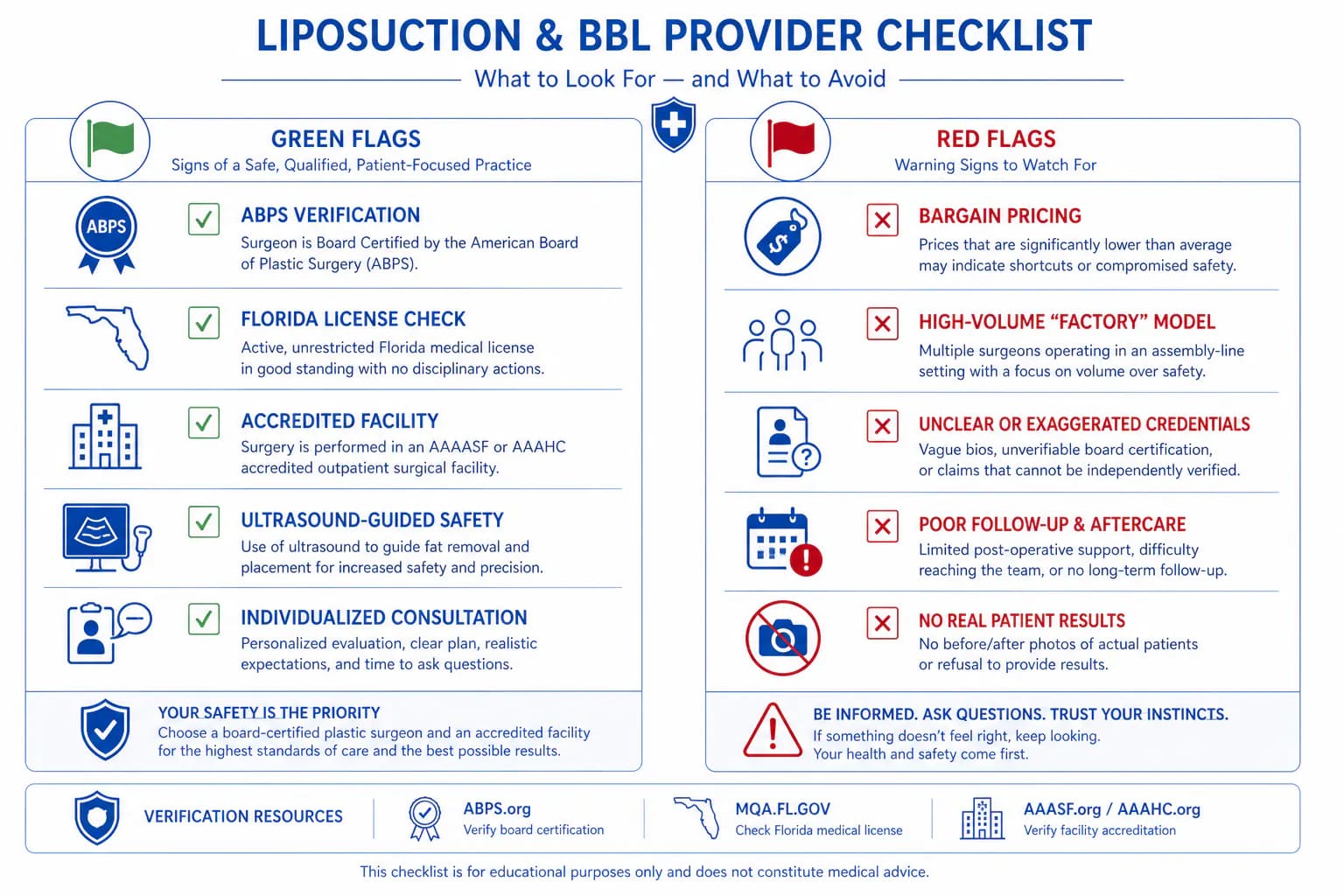
This combination requires a surgeon with high volume in both procedures. Competence in liposuction does not automatically transfer to BBL proficiency — they are different technical skills. Look for someone who performs both regularly, not someone who does lipo primarily and occasionally adds a BBL.
Credentials to verify:
- Board certification through the American Board of Plastic Surgery (ABPS). This is the specific credential that matters for this procedure — not just any board certification in a related specialty.
- Accredited surgical facility (AAAHC or Joint Commission accreditation).
- Documented BBL volume. Ask how many BBL procedures they perform per year. Low-volume BBL surgeons carry higher procedural risk.
Questions to ask at consultation:
- Do you use a subcutaneous-only fat injection technique for the BBL?
- Do you use ultrasound guidance?
- Where will the procedure be performed, and what is the facility's accreditation?
- Can you show me before-and-after photos of patients with a similar body type to mine?
The photo question is more useful than it sounds. A curated highlight reel of ideal results tells you less than before-and-afters from patients who look like you. If a surgeon cannot provide relevant comparisons, that may indicate limited case volume for your anatomy type.
What is 360 lipo with a BBL?
360 lipo with a BBL is a combination procedure where liposuction removes fat from the entire circumference of the torso — abdomen, flanks, waist, and back — and that harvested fat is purified and transferred to the buttocks. Done together in one surgery, the result is a narrowed waist and fuller, more defined buttocks simultaneously. Combined operating time is typically 3–5 hours under general anesthesia.
How much does 360 lipo and BBL cost?
In the United States, combined 360 lipo and BBL costs between $8,000 and $18,000 depending on the market, surgeon experience, and facility. Miami ranges from $7,500–$14,000; New York from $12,000–$25,000; Dallas and Houston from $9,000–$16,000. Overseas medical tourism packages average $4,000–$7,000 but require careful vetting of surgeon credentials and facility accreditation.
Is 360 lipo and BBL safe?
360 lipo is safe when performed by a board-certified plastic surgeon in an accredited facility. BBL safety has improved substantially — mortality rates dropped approximately 80% between 2017 and today, from roughly 1 in 3,000 to approximately 1 in 14,952, following a shift to subcutaneous-only fat injection technique. Zero fatalities have been reported from properly performed ultrasound-guided BBLs. The determining factor is surgeon technique: confirm your surgeon uses subcutaneous-only injection and operates in an accredited facility.
What is the recovery time for 360 lipo and BBL?
Expect a minimum of 10–14 days off work, with the no-direct-sitting restriction lasting 3–6 weeks depending on your surgeon's protocol. Strenuous exercise should wait 6–8 weeks. Significant swelling resolves by weeks 8–12, but final results are visible at three to six months as fat graft survival stabilizes.
What is the difference between lipo 360 and regular liposuction?
Standard liposuction typically targets one area — the abdomen, flanks, or back — in isolation. Lipo 360 treats the full circumference of the torso in a single surgery: abdomen, obliques, love handles, upper back, and lower back. The result is contour change from every angle, not just the front view. It also typically removes a greater total volume of fat than targeted single-area procedures.
Can you do 360 lipo without a BBL?
Yes. Many patients choose 360 lipo alone for circumferential waist definition without buttock augmentation. Standalone lipo 360 costs approximately $5,000–$10,000, carries no sitting restrictions during recovery, and is appropriate for patients who do not want buttock augmentation or do not have sufficient donor fat for meaningful transfer.
How long does 360 lipo and BBL last?
The fat cells removed during liposuction do not regenerate — the lipo 360 result is permanent provided weight remains stable. Transferred fat that survives integration (typically 50–70% of what was injected) is also permanent. Significant weight gain causes remaining fat cells throughout the body to expand, which affects contour. Stable weight maintenance preserves results indefinitely.
Am I a candidate for 360 lipo and BBL?
Strong candidates have sufficient donor fat for transfer, are in good overall health, are non-smokers or willing to stop before surgery, have stable weight close to their goal, and have realistic expectations about results. Patients with very low body fat may not have enough harvestable fat for meaningful BBL augmentation. A consultation with a board-certified plastic surgeon is the only way to assess candidacy for your specific anatomy.
Internal links:
- How Much Does Liposuction Cost?
- How Long to Wear a Faja After Liposuction
- Arm Liposuction: Complete Guide
- Chin & Double Chin Liposuction Guide
