Pregnancy fundamentally alters the female body — stretching abdominal muscles, expanding skin, and redistributing fat in ways that diet and exercise often cannot reverse. For patients seeking to restore their pre-pregnancy contours, the combination of liposuction and a tummy tuck, commonly marketed as a "mommy makeover," offers a highly effective structural solution.
What a Mommy Makeover Is (and Isn't)
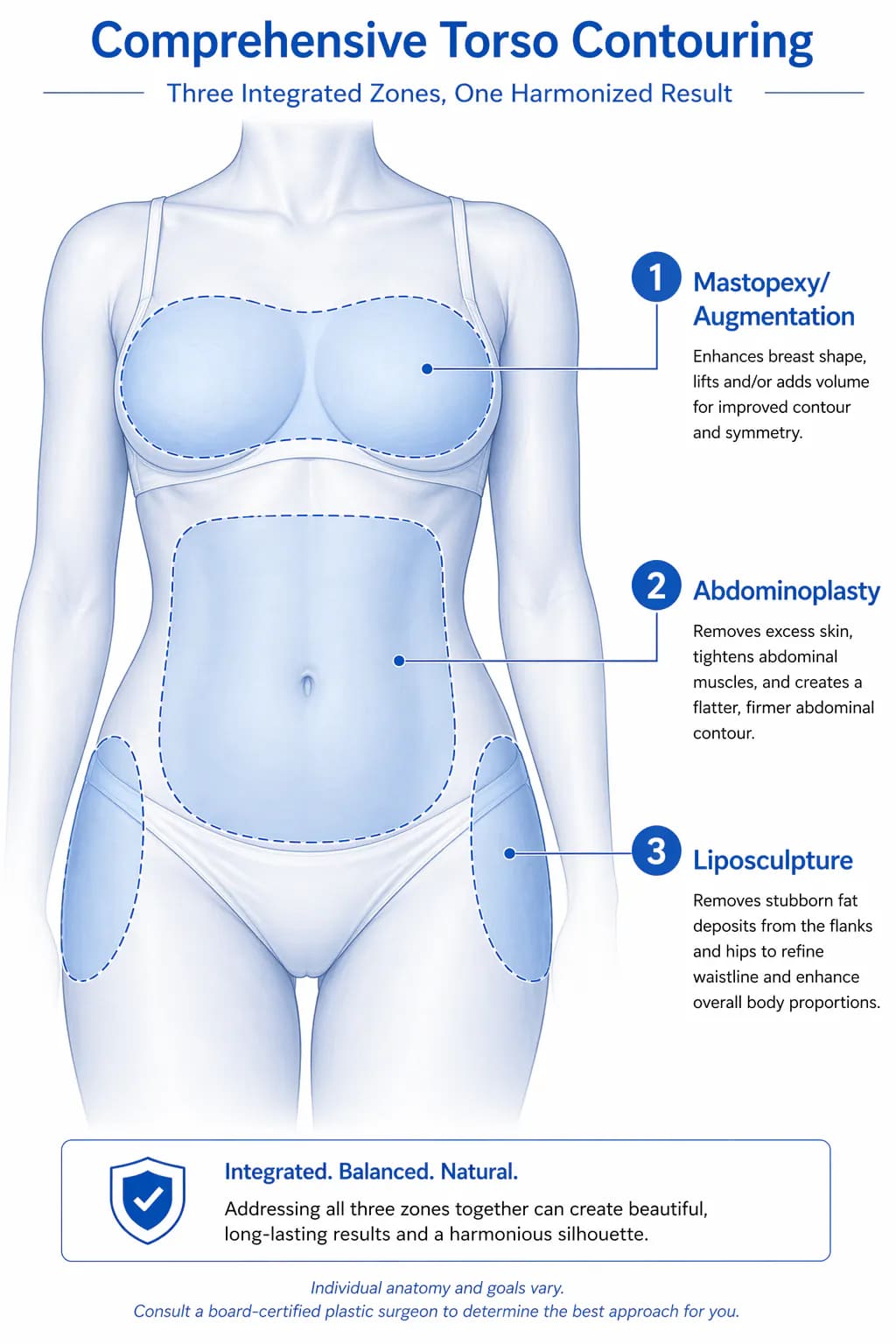
A "mommy makeover" is not a single, standardized operation. It is a colloquial marketing term for a customized combination of cosmetic surgeries performed during a single session to address the physical changes of childbearing.
At its core, the procedure restores structural integrity to the abdominal wall, addresses volume loss or ptosis (sagging) in the breasts, and removes stubborn localized fat deposits.
What this procedure is not: a weight-loss tool. A mommy makeover is a body contouring procedure designed for women who are already at or near their ideal, sustainable body weight. Using these surgeries to bypass necessary weight loss significantly increases surgical risks and compromises the outcome.
What Procedures Are Included in a Mommy Makeover?
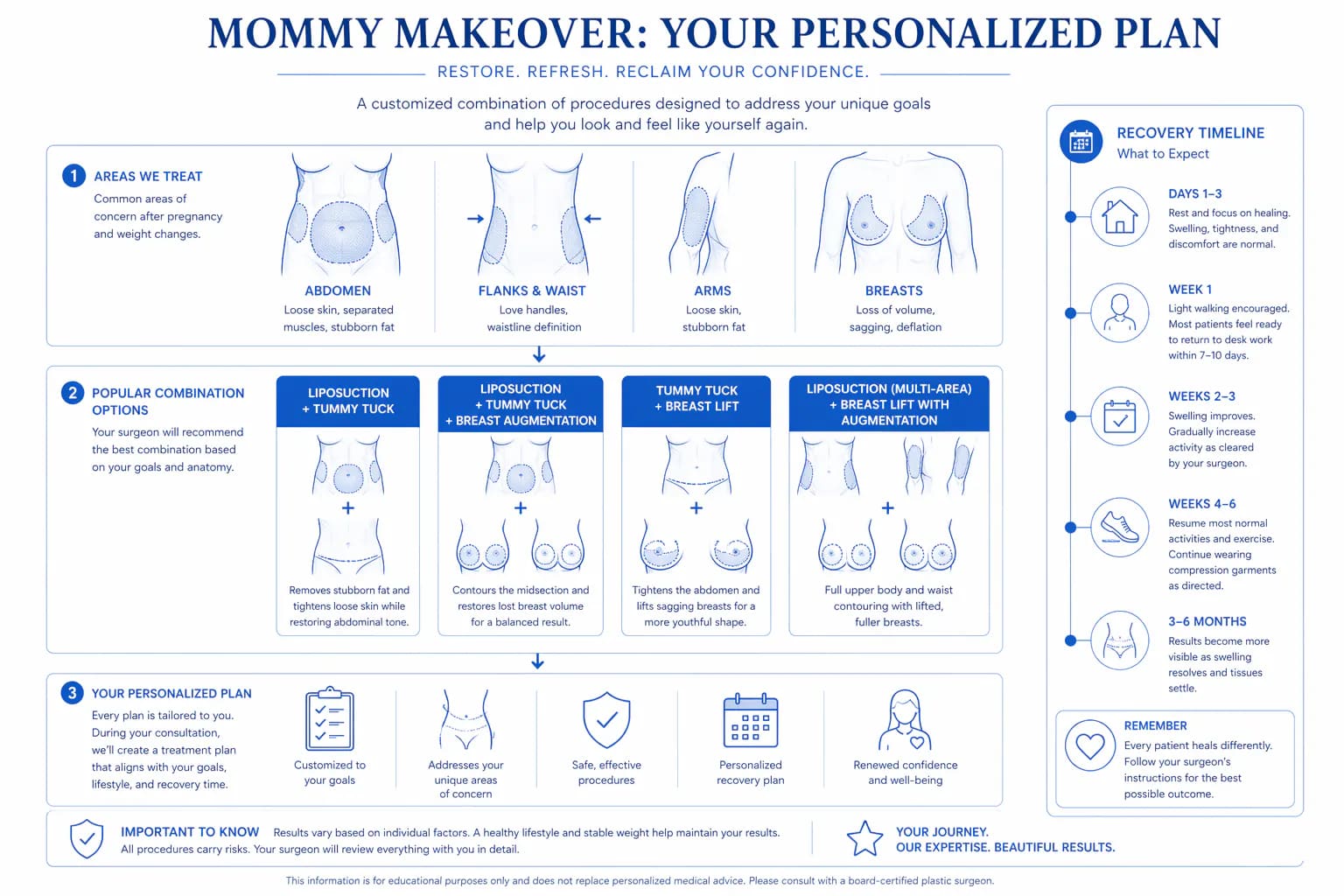
Surgeons tailor the surgical plan to your specific anatomy. While no two operations are exactly alike, the vast majority include a combination of these three elements:
1. Abdominoplasty (Tummy Tuck): The foundational element. Addresses stretched skin and separated muscles of the lower abdomen. Depending on tissue laxity, your surgeon will recommend either a full tummy tuck (addressing the entire abdomen and relocating the belly button) or a mini tummy tuck (addressing only the area below the belly button).
2. Breast Surgery: Pregnancy and lactation heavily impact breast tissue. Patients typically require a mastopexy (breast lift) to elevate sagging tissue, an augmentation (implants) to restore lost volume, or a combination of both.
3. Liposculpture: Targeted liposuction addressing the stubborn fat deposits that pregnancy frequently leaves on the flanks, hips, lower back, and thighs.
Can Liposuction and a Tummy Tuck Be Done at the Same Time?
Yes — ABPS board-certified plastic surgeons routinely perform them simultaneously, and they are highly synergistic. A tummy tuck addresses lax tissue (skin and muscle) in two dimensions. Liposuction addresses the three-dimensional fat volume of the torso.
Combined, a surgeon uses liposculpture to thin the abdominal flap and aggressively contour the flanks. This pairing prevents a boxy appearance and creates the hourglass waistline most patients are after. Read a deeper breakdown in our liposuction vs. tummy tuck guide.
What a Tummy Tuck Addresses That Lipo Can't
Many patients enter consultations requesting aggressive liposuction for a protruding "mommy pouch," only to learn that liposuction will not fix their primary issue.
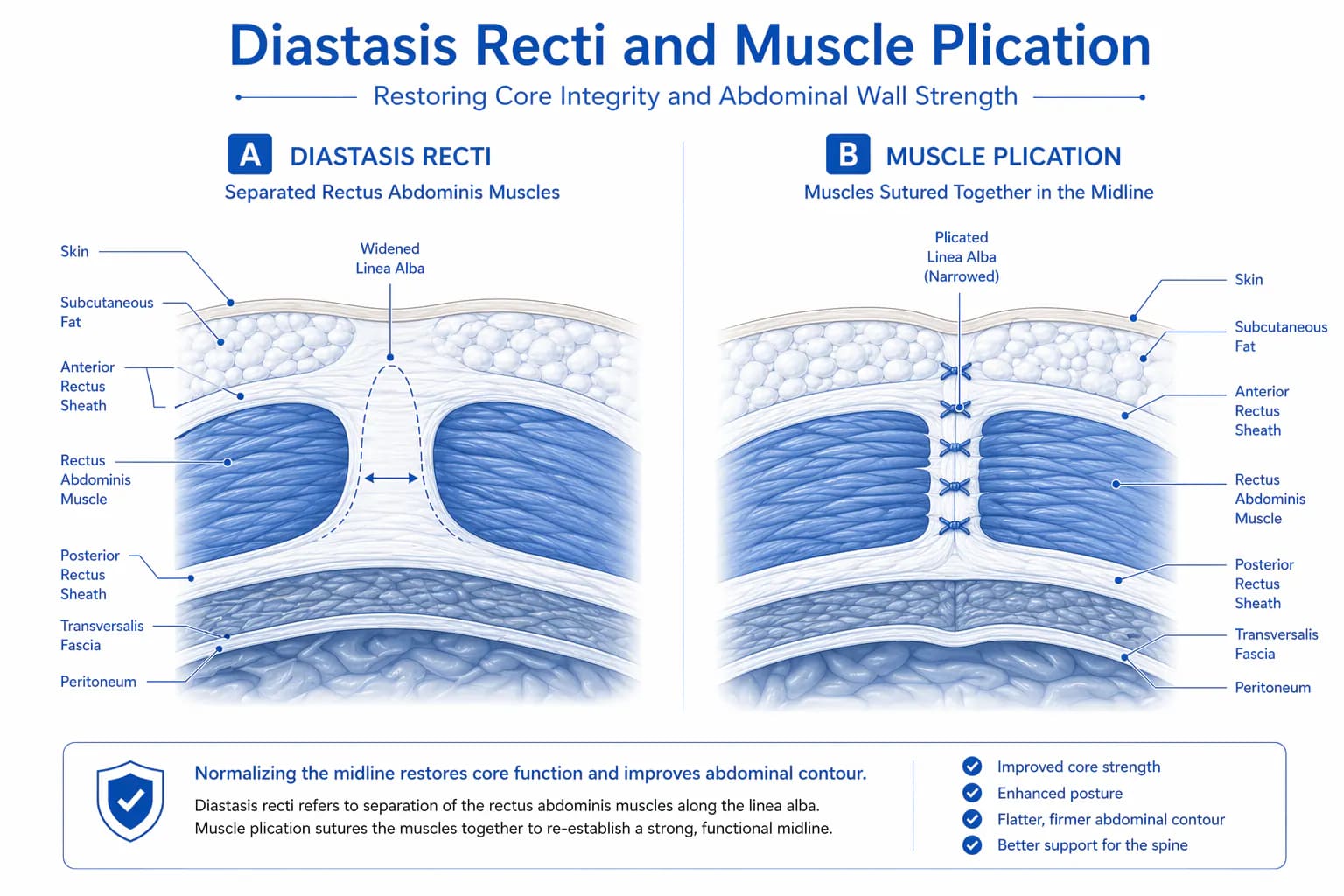
During pregnancy, the growing uterus pushes against the rectus abdominis muscles (the "six-pack" muscles). In many women, the connective tissue holding these muscles together permanently stretches and separates — a condition known as diastasis recti.
If you have diastasis recti, your internal organs push forward through this weakened muscular gap. Liposuction removes subcutaneous fat; it cannot tighten internal muscles. If a surgeon performs liposuction on an abdomen with diastasis recti, the fat will be gone but the stomach will still protrude.
An abdominoplasty involves muscle plication — the surgeon sews the separated abdominal muscles back together along the midline, creating an internal corset. And where liposuction relies on skin elasticity to contract over the new contour, post-pregnancy skin frequently lacks that elasticity. Only a tummy tuck can surgically excise the excess, inelastic skin.
The Honest Truth About Combined Procedures and Risk
Many practices heavily market the convenience of "one and done" combined surgery. While it is efficient and means a single recovery period, it also carries a higher physical toll.
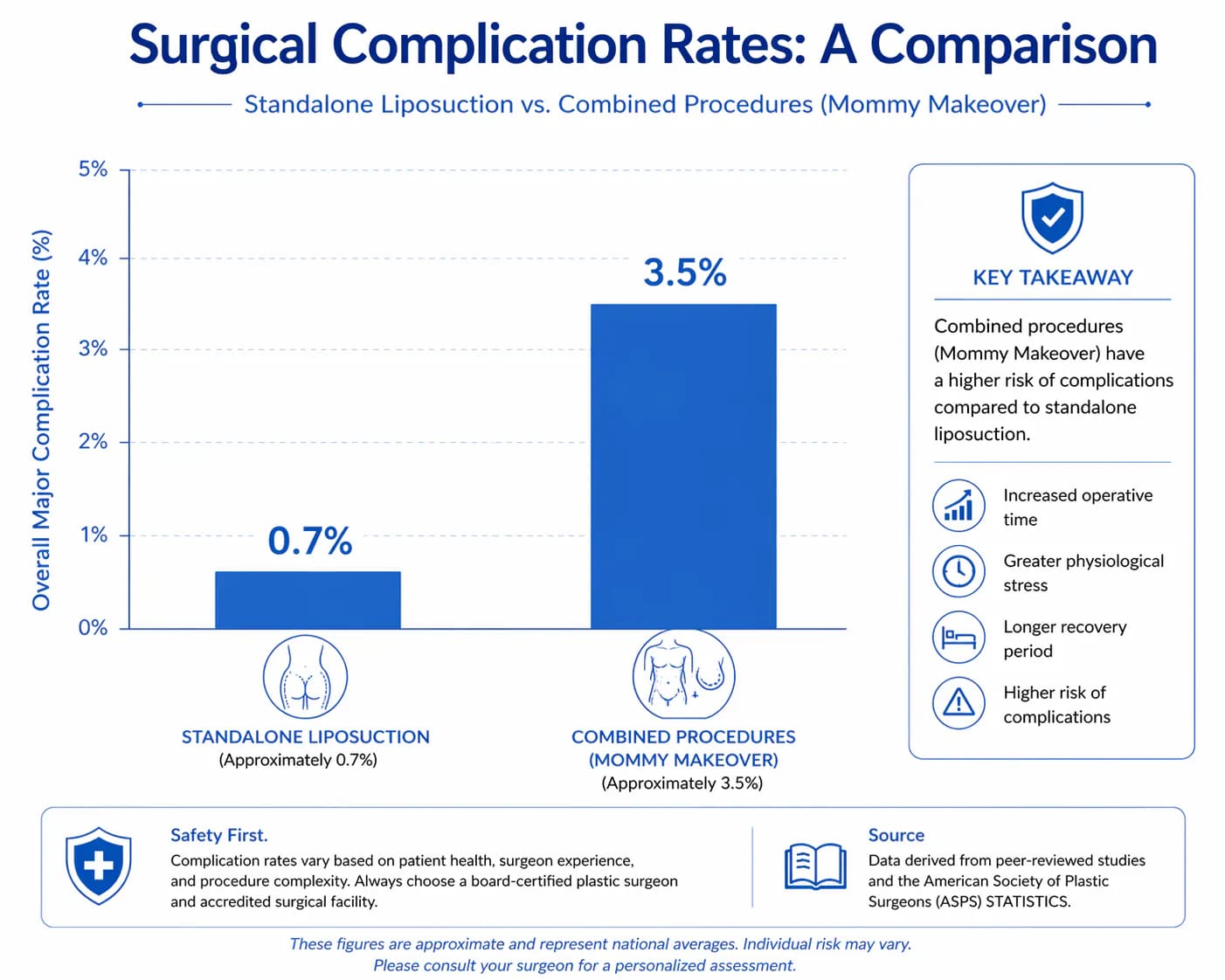
The data most clinics omit: combining procedures increases surgical risk. Standalone liposuction carries a major complication rate of approximately 0.7%. Combining a tummy tuck, breast surgery, and liposuction into a single 4-to-6-hour operation raises that rate to roughly 3.5%.
The primary risks associated with prolonged combined surgeries:
- Deep Vein Thrombosis (DVT) and Pulmonary Embolism (PE): Longer time under general anesthesia increases the risk of blood clots.
- Wound Healing Issues: Tummy tuck incisions are under significant tension; restricted blood supply can delay healing, particularly if combined with aggressive liposuction in the immediate vicinity.
- Seromas: Fluid accumulation under the skin is common after both liposuction and abdominoplasty.
A responsible, board-certified surgeon will cap total operative time — typically at 6 hours — to protect patient safety. Learn more about assessing surgical safety in our liposuction risks and safety guide.
When Is the Right Time After Pregnancy?
Patience is a clinical requirement, not just advice. Surgeons enforce strict timelines for two reasons: hormonal stabilization and anatomical baseline.
Wait 6 to 12 months after you completely stop breastfeeding. Prolactin and oxytocin significantly affect breast tissue volume and skin elasticity. Operating while these hormones are active means the surgeon is working on anatomy that is still changing. A breast lift or augmentation performed while nursing will shift significantly once breastfeeding stops, compromising the result.
Wait until your family is completely finished growing. If you undergo full abdominal muscle repair and skin excision and subsequently become pregnant, the expanding uterus will substantially reverse the muscle plication. A subsequent pregnancy can largely undo the benefits of an abdominoplasty, requiring a more complex revision later.
Cost Breakdown: Combined vs. Separate
A major advantage of the mommy makeover is cost efficiency. By combining procedures into a single operation, you pay for the operating room and anesthesiologist only once — typically saving 20% to 30% compared to spacing the surgeries out over years.
These procedures are elective and cosmetic. Insurance does not cover them. Diastasis recti causing back pain does not qualify for coverage in the vast majority of cases.
| Procedure | Average Cost (Standalone) | Average Cost (Combined) |
|---|---|---|
| Full Tummy Tuck | $8,500 – $12,000 | Included in total |
| Breast Lift with Implants | $8,000 – $11,000 | Included in total |
| Liposuction (Multiple Areas) | $5,000 – $8,000 | Included in total |
| Total Estimated Investment | $21,500 – $31,000 | $15,000 – $25,000 |
Costs vary based on surgeon expertise, geographic location, and the complexity of your surgical plan.
Recovery Timeline
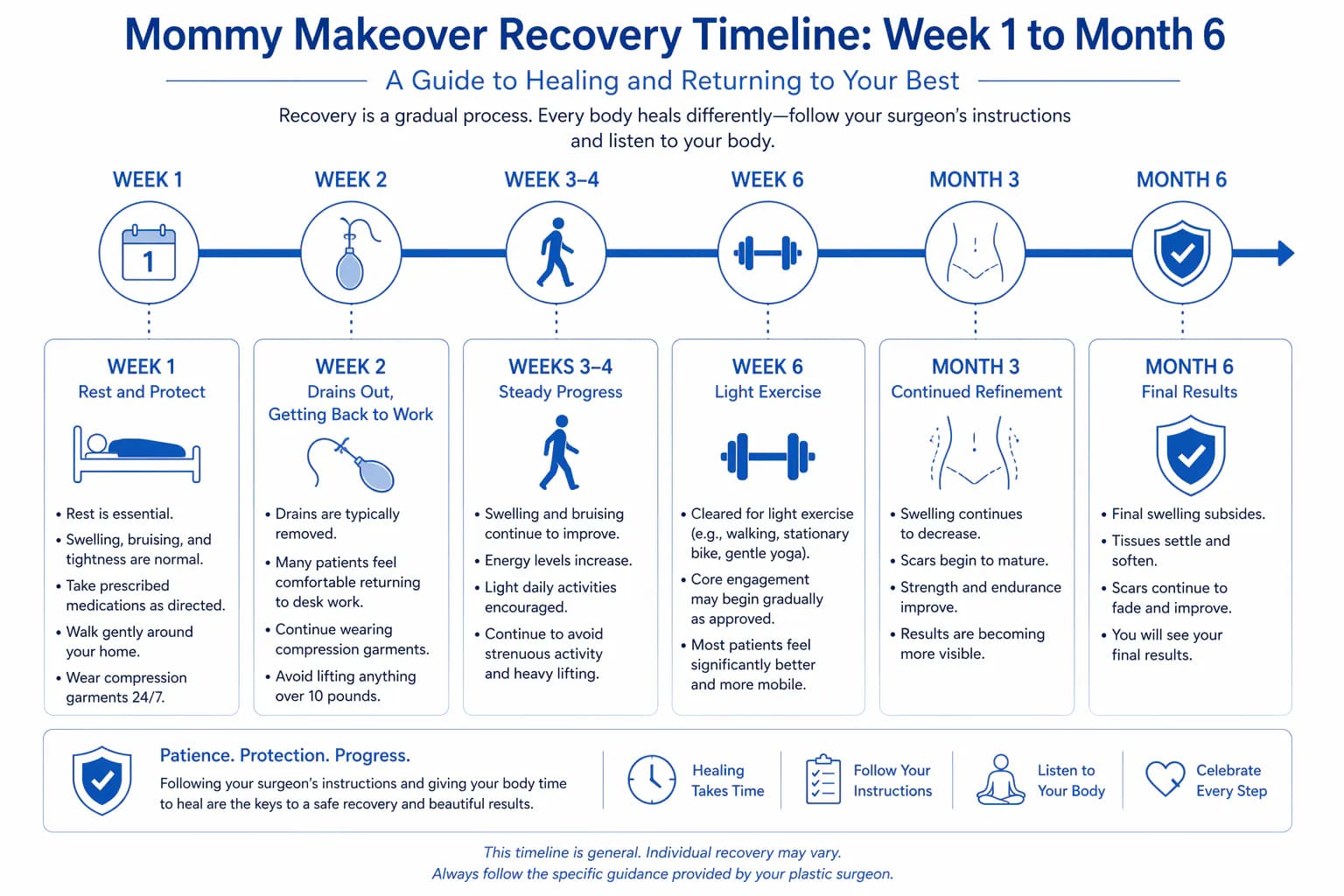
Do not underestimate the recovery. While liposuction recovery is relatively mild on its own, the abdominoplasty dictates the entire healing timeline. Because your core muscles have been surgically sutured together, you will be unable to stand fully upright or use your abdominal muscles to sit up for the first several days.
You will need full-time childcare assistance for at least the first week. You cannot lift toddlers, carry car seats, or bend to pick up objects.
| Timeline | What to Expect |
|---|---|
| Days 1–3 | High discomfort. You will walk hunched to protect the abdominal incision. Drains typically in place. Maximum assistance required. |
| Days 4–7 | Pain transitions to soreness. You can walk more upright but remain fatigued. Drains may still be present. |
| Weeks 2–3 | Drains and sutures removed. Most patients can return to desk or remote work. Driving permitted once off narcotic pain medication. |
| Weeks 4–6 | Light lower-body cardio (walking, stationary bike) when cleared. No heavy lifting or core exercises. |
| Months 3–6 | Deep swelling slowly resolves. Scars begin to mature and fade. All activities including heavy weightlifting resume when cleared. |
Realistic Results and Longevity
When performed by an expert, the results are substantial and lasting. Liposuction permanently removes the targeted fat cells. The abdominoplasty permanently restores core integrity and flattens the stomach profile.
The honest tradeoff: you will exchange loose skin for a permanent hip-to-hip scar, carefully placed low enough to sit beneath bikini bottoms.
To protect the outcome long-term, maintain a stable weight. Extracted fat cells will not return, but the remaining fat cells in your body can still expand with a sustained caloric surplus.
Choosing the Right Surgeon
A mommy makeover is one of the most technically demanding operations a plastic surgeon performs — requiring mastery of breast aesthetics, abdominal reconstruction, and body contouring in a single session.
Ensure your provider is certified by the American Board of Plastic Surgery (ABPS). Ask to see a substantial portfolio of before-and-after photos from patients with a similar pre-operative body type. For a detailed evaluation checklist, read our how to choose a liposuction surgeon guide.
What is a mommy makeover? A customized combination of cosmetic surgeries to restore a woman's body after childbirth — typically a tummy tuck to repair muscle separation and remove loose skin, breast surgery (lift or augmentation), and liposuction to contour the flanks and thighs.
How much does a mommy makeover cost? Typically $12,000 to $25,000 or more in the US, covering surgeon's fees, anesthesia, and facility costs. Combining procedures usually saves 20% to 30% compared to having each surgery separately.
Can liposuction and a tummy tuck be done at the same time? Yes — surgeons routinely perform them together. Liposuction refines the waistline and flanks while the tummy tuck repairs separated abdominal muscles and excises excess skin.
How long is mommy makeover recovery? The tummy tuck drives the timeline. Most patients need 2 to 4 weeks off work. Light exercise resumes around week 6. Final swelling resolves and tissues fully settle by the 6-month mark.
When is the right time after pregnancy? Wait at least 6 to 12 months after completely stopping breastfeeding. This allows hormones to stabilize, weight to baseline, and breast and abdominal tissues to fully contract before the surgeon assesses your anatomy.
What procedures are included? Almost always an abdominoplasty and breast surgery (lift, reduction, or augmentation). Liposuction of the flanks, back, or thighs is frequently added to harmonize the overall silhouette.
Is it safe to combine liposuction with a tummy tuck? Generally safe with an ABPS board-certified surgeon on a healthy candidate — but combining procedures does increase risk, from approximately 0.7% for standalone liposuction to roughly 3.5% for a combined multi-hour surgery.
How long do results last? Largely permanent with stable weight. Removed fat cells will not return and the repaired abdominal muscles remain secure. Significant weight fluctuations or subsequent pregnancies will substantially compromise the outcome.
